
In plain terms
We call it a read.
Not a plan, a programme or a challenge.
A read is a careful look at your answers, done before anybody writes you anything. You answer questions about your sleep, your stress load, your energy, and how your body responds to training and to fat loss. Those five get scored out of three, and the pattern across them points towards one of four common patterns. A questionnaire can't measure what is happening inside your body, so this is not a diagnosis.
There is nothing to do during the five days. No training plan, no diet, nothing to comply with and no health form to fill in. You are not being asked to change anything yet, because understanding what may be going on comes first.
If you have ever been handed a plan and found out months later it was aimed at the wrong thing, this is the step that was missing.
Sound familiar
None of this is dramatic.
That is exactly why it never gets raised.
You wake at three in the morning with nothing actually wrong.
The afternoon drops out from under you around three or four.
It has settled around your middle, and it never used to sit there.
You eat well all day, then stand in the kitchen at nine at night, not really hungry, eating anyway.
The same clothes fit differently over a fortnight while the scale does not move.
You train hard on Monday and still feel it on Thursday.
Someone tells you it is just your age, or just menopause, and the conversation ends there.
These are not random annoyances. Together they often form a pattern, and once it has a name the list stops being a list and starts being a shape.
What may be going on
Many bodies under long load go into protection mode.
Protection mode is our name for something many women describe: the harder they push, the more their body seems to hold on. Your sleep, the load you are under, whether you are eating enough, how hard you are training and how long all of it has been going on all play a part in how readily your body lets go of stored energy.
The load stays high
and it has been high for a while
Your body tends to hold on
this does not feel like the time
You eat less and train more
which usually adds to the load
That is not your body failing or you lacking willpower. It is a common response to a long stretch of high load.
The “it’s just your age” question
This stage of life is genuinely in the mix.
It is just usually not the whole answer.
About six in ten of the women who do our questionnaire tell us they are perimenopausal or past it. So the changes of that stage of life really are part of this for many of them, and nobody is arguing otherwise.
Here is what happens next though. The moment it gets put down to your age or your stage of life, everything else stops being checked. Not the load you are carrying. Not whether you are eating enough to support it. Not how long any of it has been going on.
That is not being dismissed. It is being explained away, which is worse, because it sounds like an answer and it ends the conversation.
About a third
lean towards Shape-Shift
About 2 in 5
lean towards Stress-Stored
Fewer than 1 in 20
lean towards Energy-Swing
So “it is just this stage of life” fits some women’s answers, and for many others the answers point somewhere else first. That is easy to miss when the conversation stops there.
What 97 scorecards show
97 people have finished this now.
It scores five things out of three.
97 completed scorecards
Average score, by section.
Out of three. Worst two in red.
The highest of the five.
About a third score the lowest it goes.
About 2 in 5 score the lowest it goes.
Even the best of the five only reaches 2.02.
No section is scoring well. Training is just the closest.
A 2 out of 3 on our scale means some progress, but inconsistent and hard to build on. So no section is scoring well. Training is just the closest, and it is the one that usually gets a plan written for it. For many people the training score reflects their effort, and effort is rarely what is missing. Sleep and stress, the two lowest, have a big say in whether the body can make use of the training, and they are the two that usually get the least attention.
Why the last plan did not work
A plan that does not look at the pattern is guessing.
The usual order
A plan first, and you find out whether it fits by running it for twelve weeks. If it does not work, that gets read as you not wanting it enough.
The Body Decode
The read first. Which pattern your answers lean towards, how it tends to show up, what it often gets confused with, and three things that tend to help. Then you decide what to do, knowing what you are aiming at.
Read before you prescribe. It is the whole method, and this is the part of it that costs nothing.
What you actually get
A written report, in five parts.
You get all five parts as soon as you finish the questions. Nothing is held back and nothing unlocks later, and it stays yours whatever you decide to do next.
Which pattern your answers lean towards
Part 1Named, and explained in plain terms. It comes from all of your answers, not just where the fat sits, because very different things can show up in the same place. It is a tendency, not a diagnosis.
What tends to sit behind it
Part 2What people with this pattern often have going on, and why eating less and training more often adds to the load instead of helping.
Where it shows up in an ordinary week
Part 3The things people notice day to day. Many women recognise themselves straight away and have never had a name for any of it.
What it is commonly mistaken for
Part 4Laziness, willpower, too many carbs, just getting older. Every wrong explanation is a plan you already tried.
Three things that tend to help
Part 5Aimed at the pattern your answers lean towards rather than the average, in a sensible order.
The five videos
Then someone walks you through it.
One short video a day, each covering one part of your report. Not because it unlocks, but because a report this long does not get absorbed in one sitting.
Sleep and stress load have a big say in whether training turns into anything, and they are the two that usually get the least attention.
When load stays high and recovery stays low, bodies often hold on rather than let go. Eating less and training harder usually adds to that load.
A pattern does not arrive as a diagnosis. It arrives as an ordinary week you have stopped noticing is strange.
The part most people skim, and the one worth reading twice.
Three things that tend to help, and a sensible order to try them in. The sleep and stress ones come before the training one.
Why read first
Two decades writing programmes. One observation.
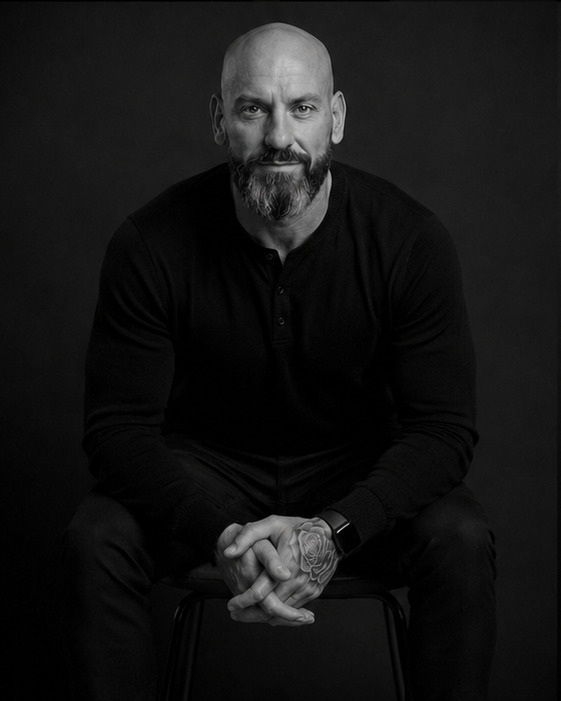
After two decades of writing training programmes, I kept seeing the same thing. The same programme worked for some bodies, did nothing for others, and made a few worse. Same plan, different results. The bodies that did not respond tended to share a pattern nobody had looked for.
So we stopped writing the plan first. The Body Decode is the read on its own, given away, because a plan aimed at the wrong thing can do more harm than good, and you should not have to pay to find out which pattern your answers lean towards.
A generic plan is a guess. A read looks carefully at what your answers show first. This is the read, and there is nothing to buy to get it.
Is this for you
This is for women whose bodies have changed.
You do not need to know which one you are yet.
Almost everyone who does this is a woman. Some have been doing the right things for a while and getting less back for it. Others stopped training a while ago and their body just does not feel like theirs. Of the women we have assessed:
About a third
score as running on very little
About half
are somewhere in the middle
Fewer than 1 in 5
score ready for a hard plan
The read works out which one you are before anyone writes you a plan, so you do not need to know before you start. That is the part everybody skips.
If you feel like yourself and your body is doing what you ask of it, this is not for you and it will not tell you much.
Before you start
The questions people ask most.
Ten minutes of questions.
Then you have a clearer idea of what you are dealing with.
Free, and there is no card at signup. Your report is on screen the moment you finish the questions, then five short videos walk you through it. If you are training well and progressing, this is not for you and it will not tell you much.
© 2026 Body Recode. All rights reserved.